
Tracking your small business expenses in Africa: the practical guide
How to track your business spending with a simple method, a few useful categories and one short check-in every week.

By Monifrik team · Product
Published 28/02/2026 · Updated 17/11/2026

About this article
What you'll put into practice today
- •Sort your spending into a few categories that help you decide, not into an accounting chart.
- •Record every expense the same day: with Monifrik, you say it out loud and it's saved in three seconds.
- •Check three numbers every week: costs that change, fixed costs, and costs as a share of sales.
- •End every review with a clear decision: cut, negotiate the price, or put the money back into what works.
Contents
Why many small businesses lose money without noticing
In many businesses, expenses are written down late, halfway, or not at all. It feels under control, but that's only a feeling.
Money leaks quietly through small things that keep coming back: small purchases, transport, repairs, field costs, advances nobody wrote down.
The 4-step method you can start today
Step 1: pick 5 to 7 categories that help you decide (stock, transport, staff, ads, running costs, surprises).
Step 2: record each expense when you pay. With Monifrik, you open the mic and say it. Aim for regular, not perfect.
Step 3: every week, compare what you planned with what you really spent, category by category, and spot the 2 biggest gaps.
Step 4: turn what you saw into dated actions: negotiate, set a limit, cut, or move the money elsewhere.
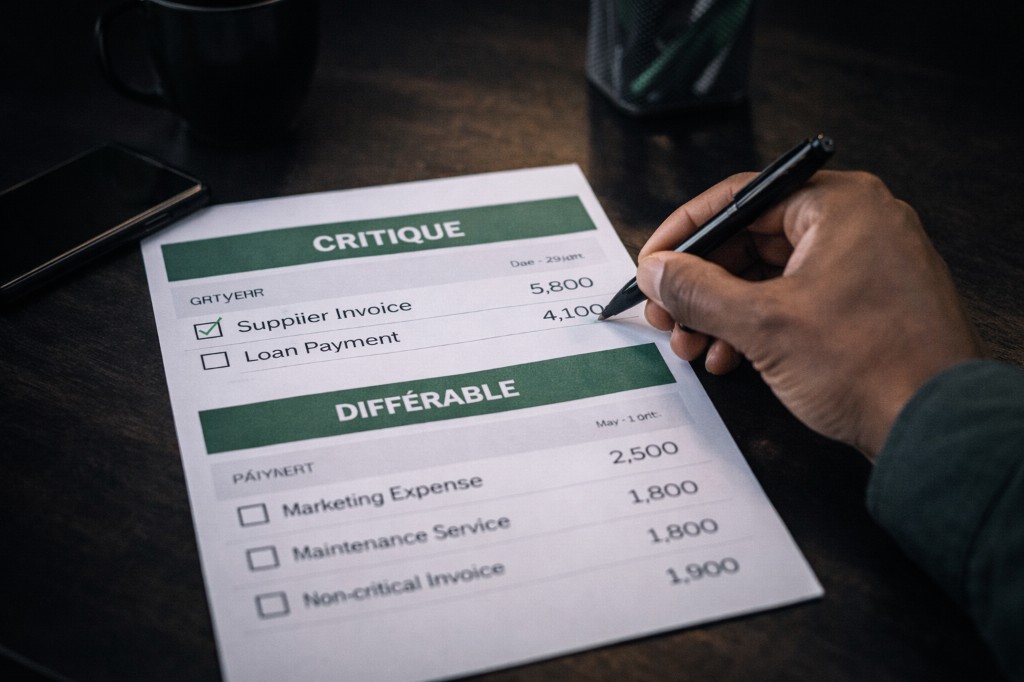
The small table to check every week
You only need three things: total spending for the week, spending by category, and the trend over 4 weeks.
Add one simple ratio: spending divided by sales. If it rises two weeks in a row, act now.
Your weekly table
| Number | When | Warning sign | What you do |
|---|---|---|---|
| Total spending | Every week | 15% above the 4-week average | Look at the 3 biggest expenses |
| Spending divided by sales | Every week | Rises 2 weeks in a row | Pause what isn't urgent |
| Costs that change | Every week | More than 10% above plan | Fix it on the ground |
Mistakes that cost a lot
Creating too many small categories from day one: you spend time recording and reading without deciding better.
Writing everything down at the end of the month: you're driving your business by looking in the rear-view mirror.
Mixing one-off costs with monthly ones: you no longer see the real actions to take.
A 14-day plan to build the habit
Days 1 to 3: choose your categories and list where your money sits (cash, Wave, Orange Money, bank). In Monifrik, say “with Wave” or “in cash” and it is noted, nothing to set up.
Days 4 to 10: record every expense, fix categories that don't fit, then run a first plan versus actual review.
Days 11 to 14: check your decisions are applied and watch the effect on spending as a share of sales.
FAQ
How many expense categories do I need at first?
Start with 5 to 7 categories that don't change. More than that and you read slowly and stop deciding. The goal is to act, not to file everything perfectly.
Should I record every expense the same day?
Yes. A quick note the same day avoids forgetting and gives you a true picture of what's left. In Monifrik, you say “3,000 F of fuel with Wave” and it's filed.
Should I separate personal and business spending?
Absolutely. Without that split your numbers are wrong and you can't tell if the business really makes money. In Monifrik, every expense is marked personal or business.
Take action
Try this method in Monifrik: say your expense out loud and it's recorded, nothing to create or fill in, for your personal money and your business. It's free.
Get started with Monifrik